


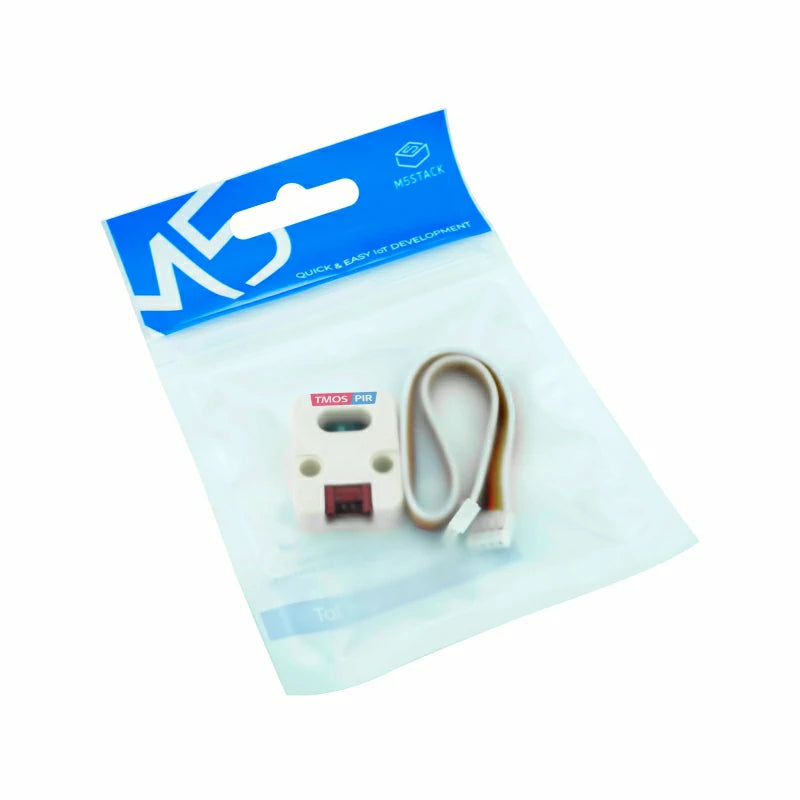
Description
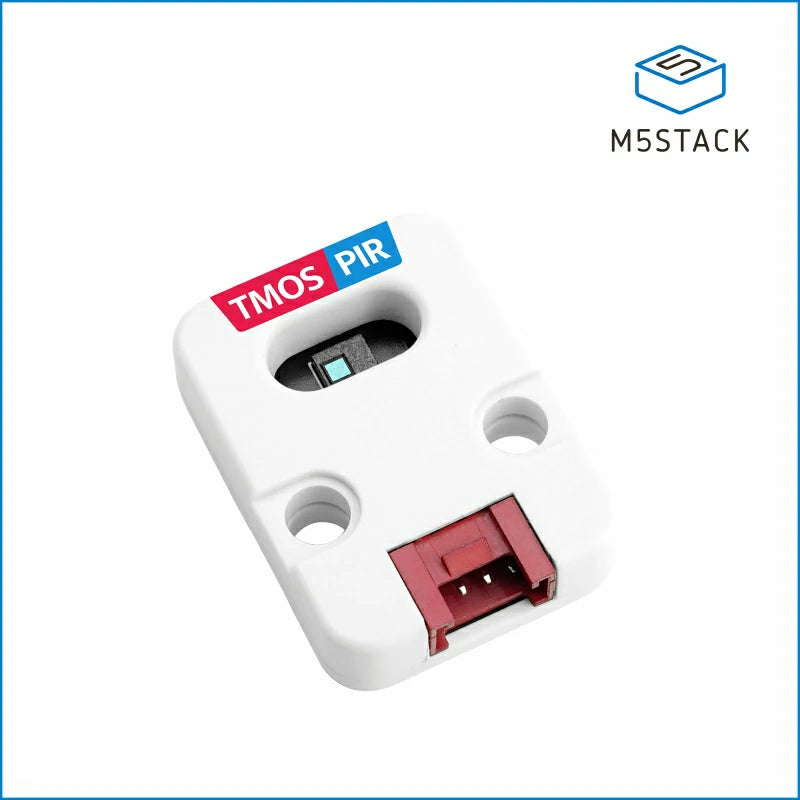
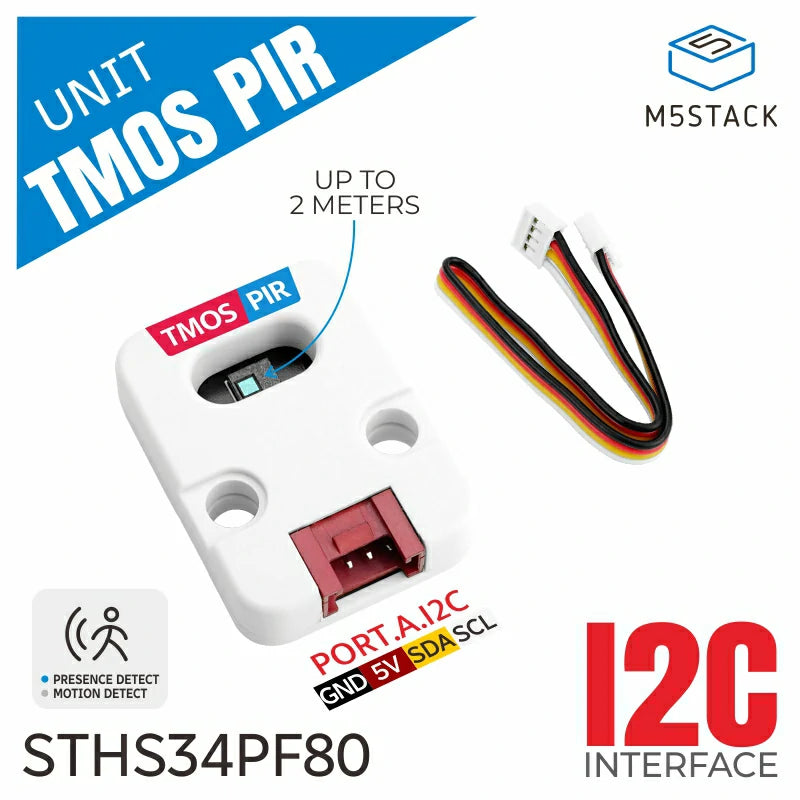
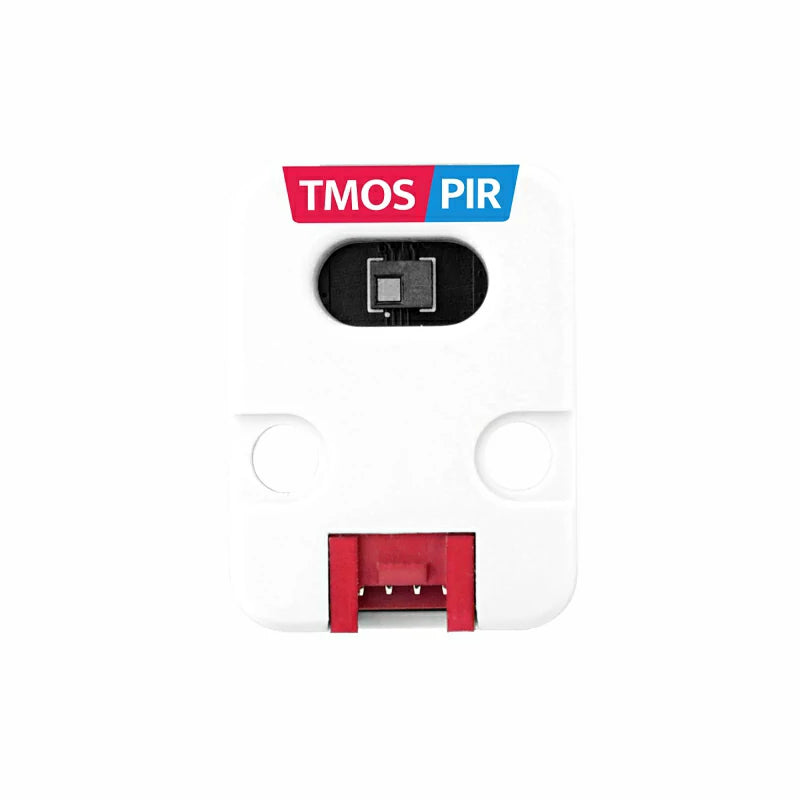
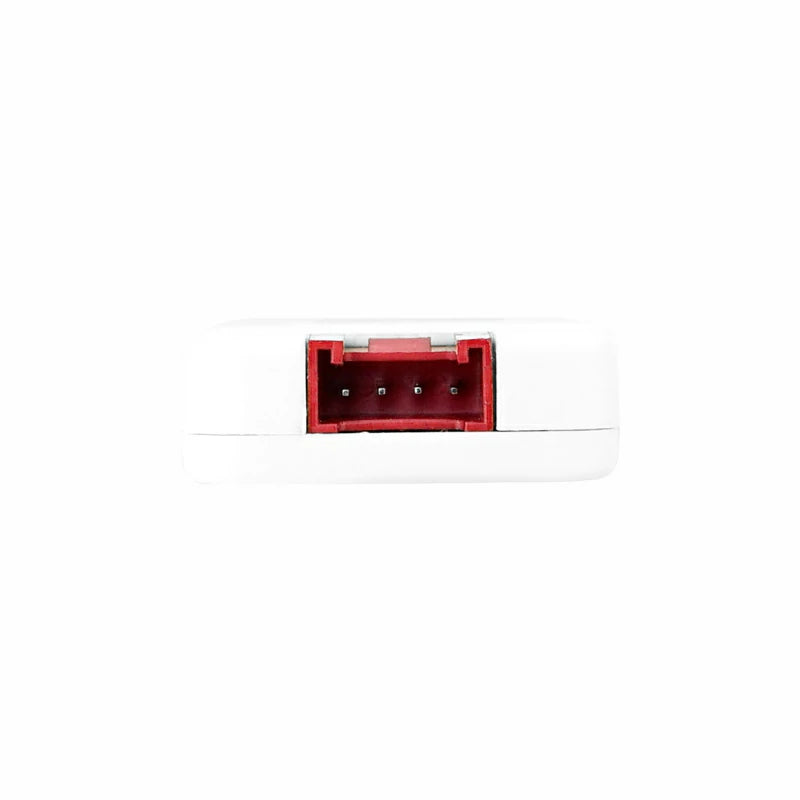
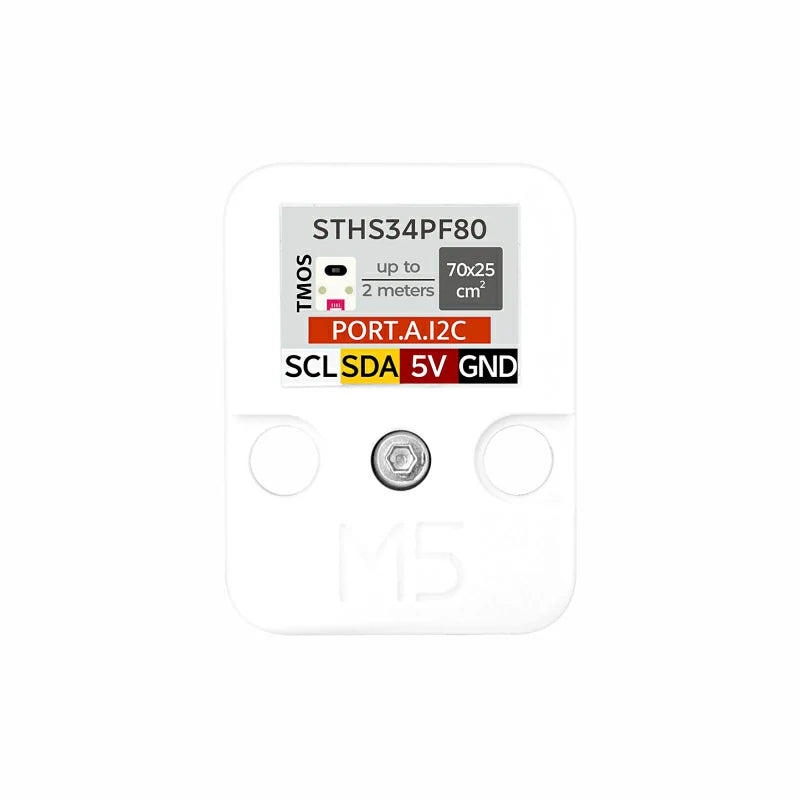
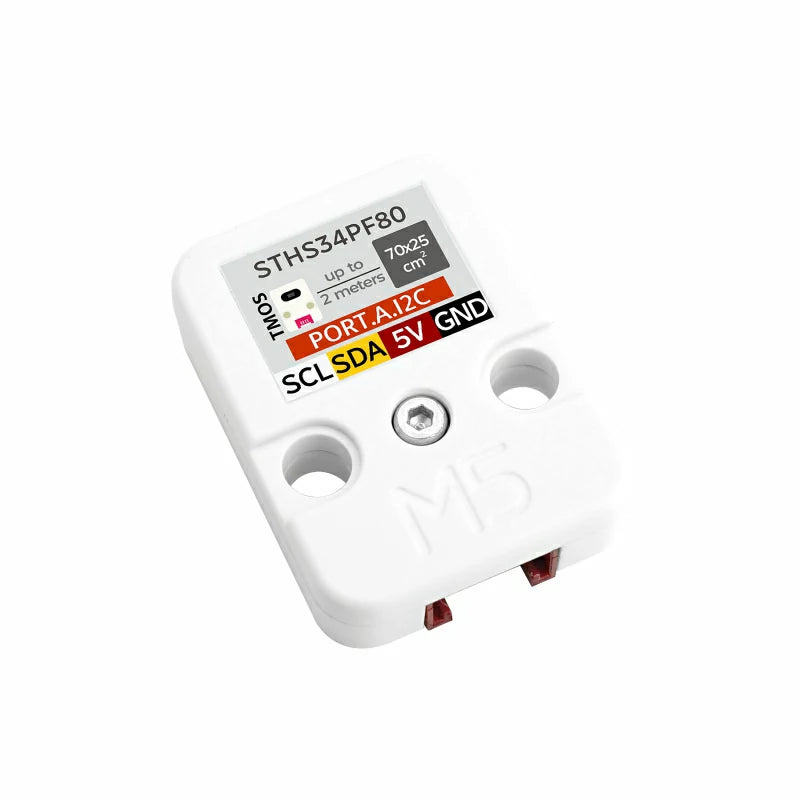
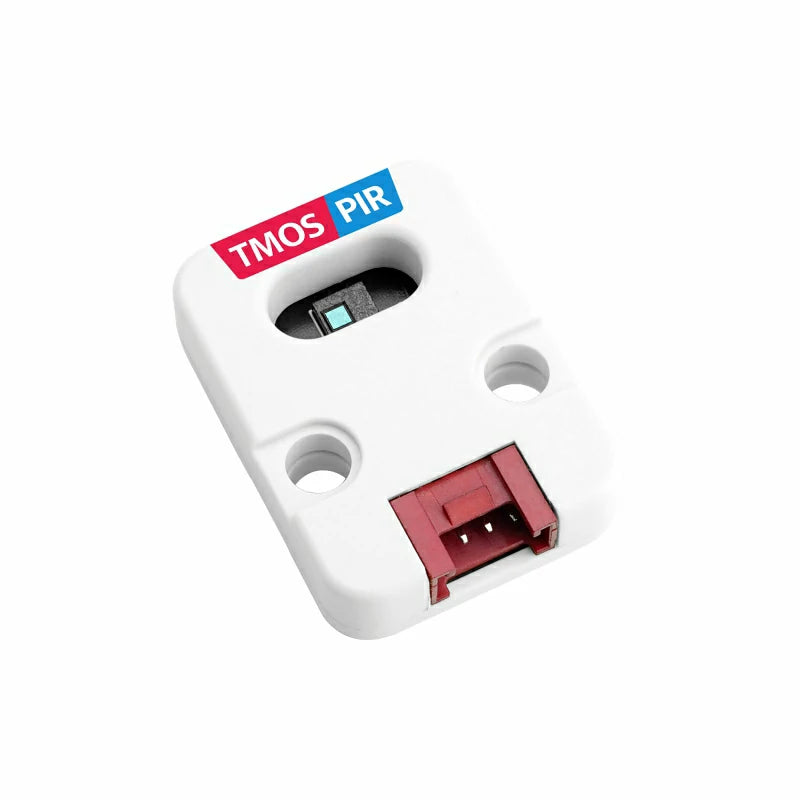
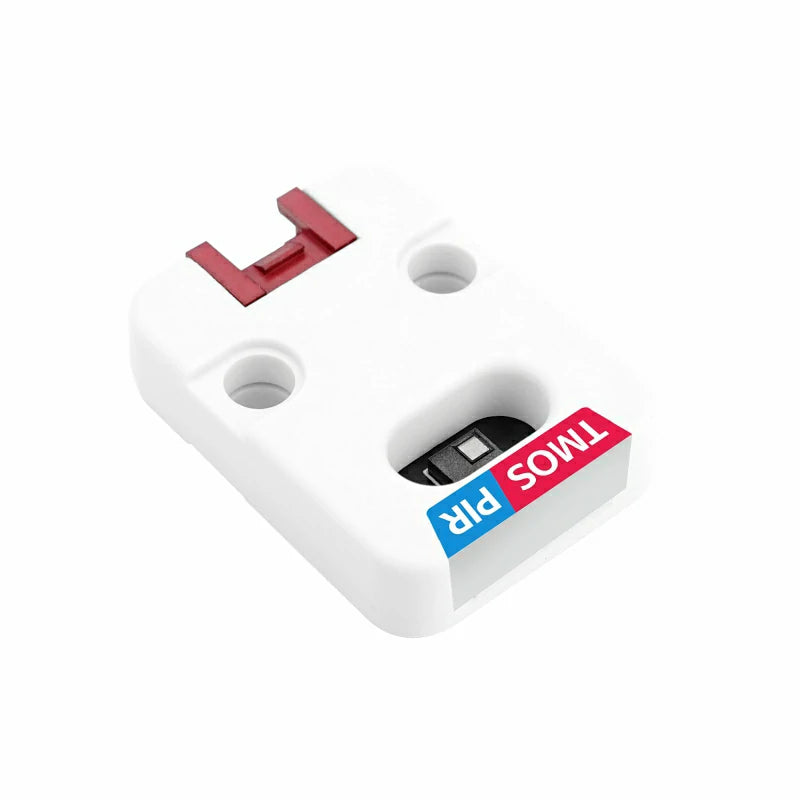
Unit TMOS PIR is a high-sensitivity infrared sensor unit for presence and motion detection, utilizing the STHS34PF80 chip solution. It communicates with M5 devices via I2C (default address: 0x5A). The working principle is based on the blackbody radiation principle described by Planck's law, which not only monitors ambient temperature but also detects human presence and motion. The sensor can distinguish between stationary and moving objects, with an 80-degree field of view, providing a wide detection range. Additionally, it supports adjustable sampling frequency and gain modes to meet the needs of different application scenarios. It is suitable for various applications such as alarm systems, smart lighting, and occupancy detection.
Notes 1. Setting the TMOS gain mode: Default gain mode: High sensitivity, but prone to sensor saturation. Saturation can cause delays in updating the motion/presence detection flags;
Wide mode: Shorter detection range, but avoids sensor saturation.
2. Sensitivity to temperature differences: The output signal of the TMOS sensor is highly sensitive to the temperature difference between the sensor's ambient temperature and the room temperature being measured. This temperature difference may affect sensor measurements.
3. Power-down mode setting: When the device is in power-down mode, the register will revert to its default value each time the device is started or restarted. The calibration temperature needs to be reset. Therefore, if the application requires a wide operating temperature range and a temperature difference between the room temperature and the sensor's thermal coupling environment, the user needs to set the wide mode upon device startup.
Wide mode: Shorter detection range, but avoids sensor saturation.
2. Sensitivity to temperature differences: The output signal of the TMOS sensor is highly sensitive to the temperature difference between the sensor's ambient temperature and the room temperature being measured. This temperature difference may affect sensor measurements.
3. Power-down mode setting: When the device is in power-down mode, the register will revert to its default value each time the device is started or restarted. The calibration temperature needs to be reset. Therefore, if the application requires a wide operating temperature range and a temperature difference between the room temperature and the sensor's thermal coupling environment, the user needs to set the wide mode upon device startup.
Features
- High-sensitivity infrared detection
- Wide field of view
- Presence and motion detection
- I2C communication (0x5A)
- Programmable output data rate
Includes
- 1 x Unit TMOS PIR
- 1 x HY2.0-4P Grove cable (20cm)
Applications
- Presence and proximity sensing
- Alarm/security systems
- Furniture automation
- Smart lighting
- IoT
- Smart lockers
Specifications
| Specification | Parameter |
|---|---|
| Sensor | STHS34PF80 |
| Communication Interface | I2C Communication @0x5A |
| Measurement range | Over 2 meters |
| Minimum detectable size | 70 x 25 cm² |
| Field of view | 80° |
| Programmable output data rate | 0.25 Hz to 30 Hz |
| Infrared wavelength | Infrared light in the 5 to 20µm range |
| Infrared sensitivity | 2000 LSB/°C |
| Sensor accuracy | ±0.3°C |
| Gain mode | Default gain mode, wide mode |
| Product Size | 32.0 x 24.0 x 5.2mm |
| Product Weight | 4.5g |
| Package Size | 138.0 x 93.0 x 6.2mm |
| Gross Weight | 10.0g |
Product Comparison
| Product | Chip Solution | Measurement Range | FOV | Communication | Features |
|---|---|---|---|---|---|
| TMOS PIR Unit (U185) | STHS34PF80 | 2M | 80° | I2C (0x5A) | Thermal radiation presence and motion detection |
| PIR Unit (U004) | AS312 | 5M | 100° | IO | Thermal radiation motion detection |
| Thermal2 Unit (U149) | MLX90640 | Depends on distance and material reflectivity | 110° (32x24 pixels) | I2C (0x52) | Thermal imaging |
| NCIR2 Unit (U150) | MLX90614 | Depends on distance and material reflectivity | 90° | I2C (0x5A) | Single-point heat temperature detection |